


Region Six Alcohol and Drug Abuse
11000 County Road GG 5, Las Animas
Pay with: Medicaid · Sliding fee scale
SAMHSA data as of November 16, 2026
For many people, care starts with detox. Staff stay close and treat withdrawal. Heavy drinkers can be in danger if they quit alone. Per SAMHSA, 37 sites in Colorado offer it.
Keep two things nearby: the ZIP code and the insurance card (yours or your loved one's). You'd reach a paid referral line. It's answered by a partner, not any program on this site.

12 of 37 programs, per SAMHSA FindTreatment.gov (November 16, 2026). Programs with the longest SAMHSA service list come first, then A–Z. Listing costs programs nothing; the referral line here is paid by a partner. How we order results.
Don't know where to begin? Call (719) 319-1356 You'd reach a paid referral line. It's answered by a partner, not any program on this site.
11000 County Road GG 5, Las Animas
Pay with: Medicaid · Sliding fee scale
8800 Fox Drive, Denver
Pay with: Medicaid · Private insurance coverage
CARF accreditation (self-reported to SAMHSA)
1125 Three Springs Boulevard, Durango
Pay with: Medicaid · Medicare · Private insurance coverage
1115 Elkton Drive, Colorado Springs
Pay with: Medicaid · Medicare · Private insurance coverage
5920 South Estes Street, Littleton
Pay with: Private insurance coverage
Joint Commission accreditation (self-reported to SAMHSA)
1004 Carbon Place, Trinidad
Pay with: Medicaid · Sliding fee scale
1026 Maxwell Street, Colorado Springs
Pay with: Medicaid · Sliding fee scale
5701 East Evans Avenue, Denver
Pay with: Medicaid · Medicare · Private insurance coverage
3300 Arapahoe Avenue, Boulder
Pay with: payment info not given to SAMHSA
4401 South Quebec Street, Denver
Pay with: Private insurance coverage · TRICARE
Joint Commission accreditation (self-reported to SAMHSA)
1820 South Potomac Street, Aurora
Pay with: Medicaid · Private insurance coverage · TRICARE
Joint Commission accreditation (self-reported to SAMHSA)
4880 Ziegler Road, Fort Collins
Pay with: Medicaid · Private insurance coverage · TRICARE
Joint Commission accreditation (self-reported to SAMHSA)
Data comes from public agencies. Advertisers supply none of it.
Colorado has 37 SAMHSA-listed facilities offering medical detox (November 16, 2026)[1]; Colorado Springs (6), Aurora (4) and Denver (4) has the most. 86% take Medicaid; a sliding fee scale is available at 23.
The gist
Picking a program: what to check
Quality treatment has five signs, per SAMHSA. Count of Colorado medical detox programs that report each one to SAMHSA:
CARF or Joint Commission accreditation shows for 27 of the 37 Colorado medical detox programs. The state license is worth asking about as well; BHA grants the license.
Medication for opioid or alcohol use is on offer at 34 of 37: methadone, buprenorphine or naltrexone.
Evidence-based therapy appears at 37 of 37, among them CBT (cognitive behavioral therapy), motivational interviewing and contingency management.
At 0 of 37, yes: couples or family therapy is part of care.
After discharge, 36 of 37 provide recovery support, for example peer support or help with housing.

Median distance: 42.2 miles, as the crow flies from the middle of each Colorado county (64 in all) to the closest facility with medical detox. 43 counties are farther than 30 miles.
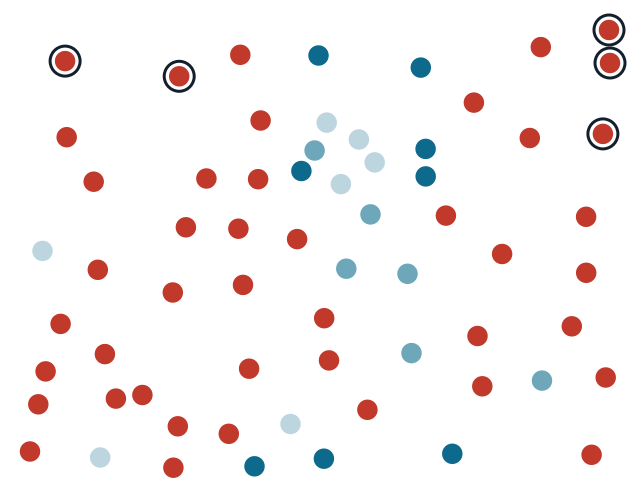
| County | Nearest, in miles |
|---|---|
| Sedgwick County | 132.7 |
| Phillips County | 130.2 |
| Yuma County | 126.7 |
| Moffat County | 104.7 |
| Routt County | 97.2 |
| Logan County | 93.0 |
| Kit Carson County | 91.1 |
| Pitkin County | 86.5 |


Cities with the 37 facilities offering medical detox
| City | Has it | Total |
|---|---|---|
| Colorado Springs | 6 | 27 |
| Aurora | 4 | 23 |
| Denver | 4 | 75 |
| Grand Junction | 3 | 9 |
| Alamosa | 2 | 5 |
| Durango | 2 | 4 |
| Littleton | 2 | 10 |
| Loveland | 2 | 4 |
| Pueblo | 2 | 14 |
| Arvada | 1 | 5 |
| Boulder | 1 | 8 |
| Fort Collins | 1 | 8 |
| Greeley | 1 | 7 |
| Las Animas | 1 | 2 |
| Longmont | 1 | 6 |
| Substance type | Facilities |
|---|---|
| Alcohol | 36 |
| Opioids | 36 |
| Cocaine | 35 |
| Methamphetamines | 35 |
| Benzodiazepines | 34 |
Don't know where to begin?
You'll find 6 of the 37 in Colorado Springs. Get in touch with a program directly, or try the referral line below.
You'd reach a paid referral line. It's answered by a partner, not any program on this site.
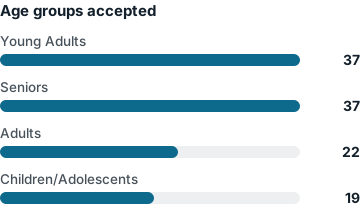
37 listings, counted by who they serve:
Most served: Young Adults (37 of 37), next Seniors (37 of 37), plus Adults (22 of 37).
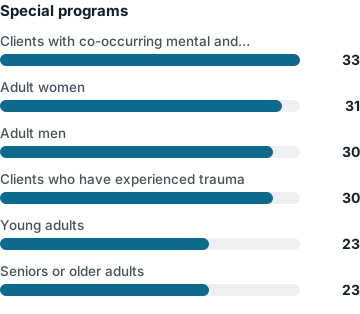
Most served: Clients who have a mental illness and a substance use disorder (33 of 37), next Adult women (31 of 37), Adult men (30 of 37), plus Clients who have experienced trauma (30 of 37).
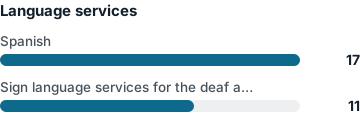
Most served: Spanish (17 of 37) and Sign language for deaf or hard-of-hearing clients (11 of 37).
Each program reports this itself: where it treats people and how it helps after discharge.
Most served: Outpatient (31 of 37), next Regular outpatient treatment (29 of 37), plus Residential/24-hour residential (28 of 37).

Most served: Assistance with obtaining social services (35 of 37), next Mentoring/peer support (30 of 37), plus Self-help groups (25 of 37).

Most served: Buprenorphine used in Treatment (33 of 37), next Naltrexone used in Treatment (31 of 37), plus Methadone used in Treatment (3 of 37).

Most served: Substance use disorder counseling (37 of 37), next Relapse prevention (36 of 37), plus Cognitive behavioral therapy (35 of 37).

Who covers medical detox?
32 of the 37 facilities accept Medicaid and 23 have a sliding fee scale.
Not for everyone: no program here says its detox is free to all. Still, 23 of the 37 facilities use income-based prices, 29 have county, state or federal money for the uninsured, and 20 report SAMHSA block grants. Uninsured? Start with those; see low-cost care.
Take a program's quote to the cost calculator.
Free, confidential, available 24/7. You'd reach a paid referral line. It's answered by a partner, not any program on this site.
20 of the 37 detox programs offer outpatient detox; you go home at night and come in, often every day early on. Residential detox: 27, with you staying on site day and night. Hospital inpatient detox: 3, inside a hospital where medical staff are on hand. 12 have both outpatient and live-in detox, so you can switch between them without changing programs.
If withdrawal stays mild to moderate, you can often do it as an outpatient. You need someone at home with you, plus a daily visit to the provider until you are stable.[4] Withdrawal that is moderate to severe may call for a hospital or a unit set up for it. Staff there monitor vital signs closely and stay alert to delirium tremens.[4] Can't judge how bad your withdrawal will get? Ask the program for an assessment before you pick one.
| Detox setting | Listings | Top place |
|---|---|---|
| Outpatient detox | 20 | Colorado Springs (3), Grand Junction (3), Aurora (2), Denver (2) and Durango (2) |
| Residential detox | 27 | Colorado Springs (4), Aurora (3) and 5 more cities with 2 each |
| Hospital inpatient detox | 3 | Aurora (1), Colorado Springs (1) and Littleton (1) |
Which setting is right for you? Call (719) 319-1356 You'd reach a paid referral line. It's answered by a partner, not any program on this site.
Detox is for withdrawal only. The addiction still needs its own treatment, and most people need more care once it ends.[5]
Alcohol
Most often it begins within 8 hours of the last drink, but it can be days later. It peaks at 24 to 72 hours, and some symptoms hang on for weeks.
Short-acting opioids, heroin included
Expect it within 12 hours of the last use. Rough, but not life-threatening.
Methadone
Typically within 30 hours of the last dose, so it starts later than heroin.
Timing per MedlinePlus (NIH).[4][5]
A sudden stop after long, heavy drinking can lead to nausea, seizures and a racing heart.[6] The worst form is delirium tremens: confusion, fever and hallucinations.[4] Care means sedatives, with blood pressure and heart rate checked often.[4] Alcohol detox is available at 36 of the 37 programs in Colorado.
Withdrawal eases with methadone or buprenorphine; buprenorphine can also shorten detox.[5] 33 of the 37 programs offer buprenorphine and 3 methadone. 31 say medication is standard during their detox.
Know your next step before detox begins. It may be counseling, medication, intensive outpatient or residential care.[5] You can keep one team: 28 of these facilities offer residential care as well, and 24 offer intensive outpatient. Compare inpatient rehab and outpatient programs.
Here is each program with detox on file at SAMHSA (November 16, 2026), its detox setting, and if it takes Health First Colorado. The 37 SAMHSA listings make 37 rows, because one row holds all of an organization's sites in a city. Each program page gives you the address, services and nearby alternatives.
On November 16, 2026, the Colorado Rehab editorial team checked this page against the sources above. Our process.
Medical detox in Colorado: the short answer
37 addiction treatment facilities in Colorado (out of 327) offer medical detox, according to SAMHSA's FindTreatment.gov locator on November 16, 2026.
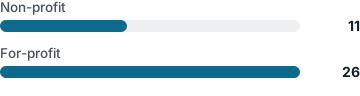
19 cities and 15 counties have at least one. The table here ranks the top 15 cities. Non-profit: 11 of the 37. Run by government agencies or the VA: 0.
Colorado Springs has the most, with 6, followed by Aurora (4), Denver (4) and Grand Junction (3).
Top county: El Paso County, with 6. Beyond those, 14 cities have one or more; browse the directory of all 327 centers names each one.
Most of the time, yes. Of 37 facilities, 32 take Health First Colorado; 19 take Medicare, and private insurance works at 31.
No insurance? 23 set fees by income and 29 use public funds. For Health First Colorado, Aurora and Colorado Springs lead jointly with 4 each. Want to know which plans one of the 32 bills? Ask it directly, or give the referral line a call (paid; answered by our partner).
Among the 37, 19 take children and teens, 22 have veterans programs and 17 serve Spanish speakers; 22 accept court referrals. 18 of 19 teen programs take Health First Colorado; for TRICARE it's 18 of 22 veterans programs; not sure which of the 37 suits you? Ask a program, or give the referral line a call (paid; answered by our partner).
The drug and the amount you used decide it.
For alcohol, symptoms usually show up by hour 8 after the last drink, peak between 24 and 72 hours, and a few linger for weeks. For opioids, it starts about 12 hours after heroin was last used, or about 30 hours after methadone. With buprenorphine, it can be shorter. Addiction treatment itself usually goes on once detox is done.
Often yes, if the withdrawal stays mild to moderate and a person can be with you. In Colorado, 20 of 37 programs offer outpatient detox.
If withdrawal gets moderate or severe, you may need a hospital or another setting that treats it. Both settings are available at 12 facilities here.
For many people, care starts with detox.
Staff stay close and treat withdrawal. Heavy drinkers can be in danger if they quit alone. Look at it next to inpatient & residential rehab and outpatient, IOP & PHP; 28 of these 37 also have residential care, and 31 outpatient care. 34 of the 37 treat co-occurring mental health conditions.
Still weighing medical detox? Call (719) 319-1356 You'd reach a paid referral line. It's answered by a partner, not any program on this site.
Detox around you